


The Jersey Devil
The dense Pine Barrens of southern New Jersey have long been the site of strange occurrences and eerie sightings. The most enduring and terrifying legend from this region is that of the Jersey Devil. This monstrous creature has haunted the imaginations of New Jersey residents for centuries, its story woven into the very fabric of the state’s folklore.
In the early 18th century, the Pine Barrens were sparsely populated, a wild and untamed land. It was here, in 1735, that a Quaker woman named Deborah Leeds, mother to twelve children, discovered she was pregnant with her thirteenth. She cursed the child in a moment of exasperation, crying, “Let this one be a devil!”
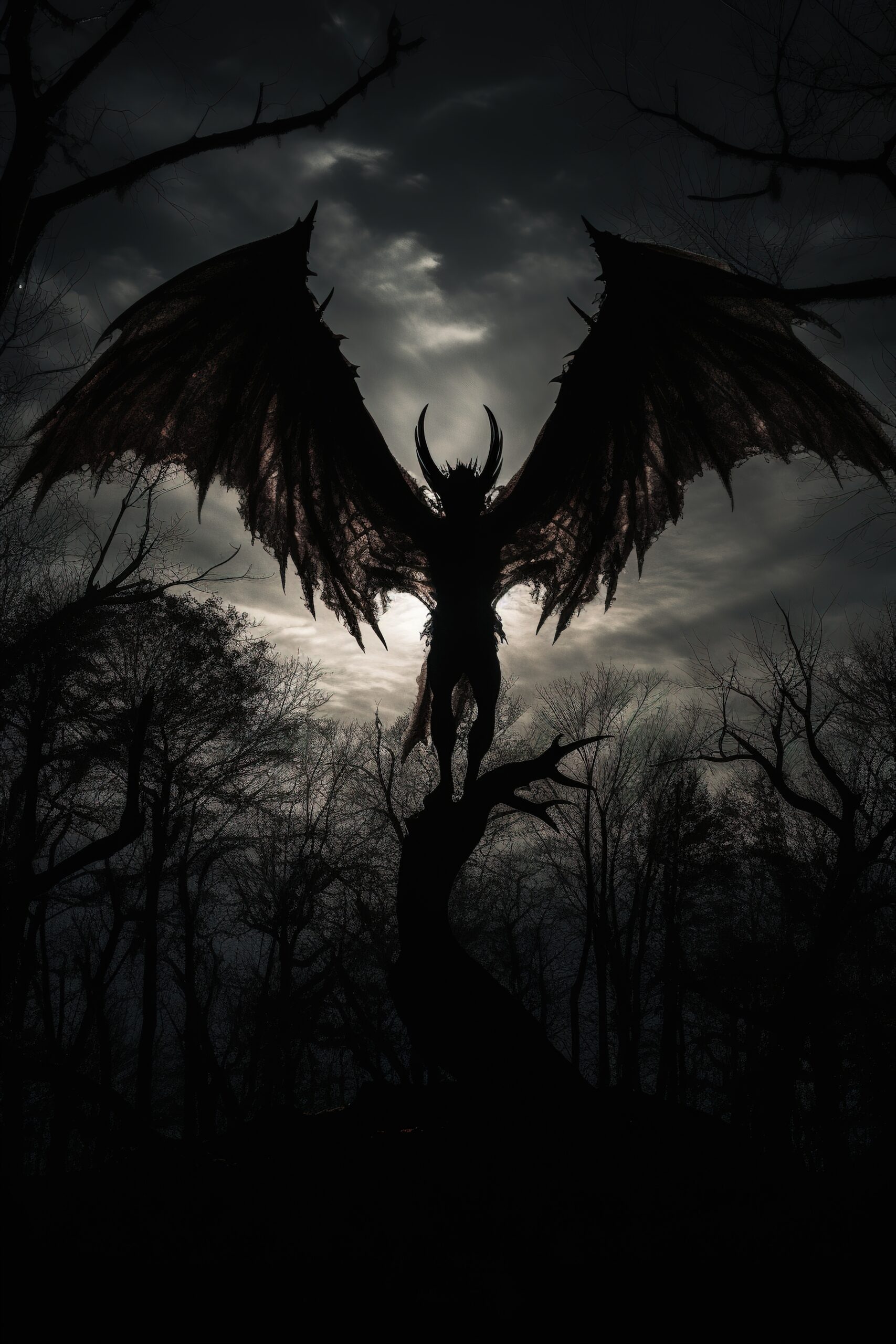
On a stormy night, deep in the heart of the forest, Deborah went into labor. The midwives and family gathered to witness what they thought would be the birth of another ordinary child. Instead, the infant was born grotesque and deformed. As they watched in horror, the baby transformed into a terrifying creature with leathery wings, a goat’s head, and hooves for feet. It let out a blood-curdling screech and flew up the chimney, vanishing into the night.
Following the creature’s birth, the Pine Barrens were never the same. Reports of strange occurrences began to surface. Livestock were found mutilated, strange hoofprints appeared in the snow, and eerie cries echoed through the forest at night.
In 1740, a clergyman was called to exorcise the creature, but his efforts proved futile. The legend spread, and sightings became more frequent. The creature was dubbed the “Leeds Devil,” after the Leeds family, and it struck fear into the hearts of all who lived near the Pine Barrens.
During the Revolutionary War, the legend of the Jersey Devil was well-known among soldiers. Several notable encounters were reported during this period. One tale tells of Captain Kidd, the notorious pirate, who was said to have buried treasure in the Pine Barrens. The Jersey Devil was rumored to guard this treasure, attacking anyone who came near.
In 1778, Commodore Stephen Decatur was testing cannonballs at Hanover Mills Works in the Pine Barrens. He reported seeing a strange creature flying across the sky and ordered his men to fire upon it. The cannonball struck the creature, but it continued on its way, unharmed.
The 19th century brought industrialization to New Jersey, but the legend of the Jersey Devil persisted. In 1820, Joseph Bonaparte, the elder brother of Napoleon Bonaparte and former King of Spain, was living in Bordentown, New Jersey. One day, while hunting in the Pine Barrens, he encountered the creature. He described it as having the head of a horse, the wings of a bat, and the body of a dragon. He watched in shock as it flew away, confirming the tales he had heard from the locals.
Throughout the 19th century, the Jersey Devil continued to terrorize the Pine Barrens. Farmers reported losing livestock, and children were warned to stay away from the forest. Despite numerous attempts to capture or kill the creature, it remained elusive.
The most famous series of sightings occurred in January 1909. Over the course of a week, hundreds of people across southern New Jersey and Philadelphia claimed to have seen the Jersey Devil. Newspapers published sensational accounts of the creature’s attacks and sightings, sparking widespread panic.
Footprints were found in the snow, and witnesses described a creature matching the familiar description: wings, hooves, and a terrifying scream. Police in Camden and Bristol, Pennsylvania, even fired upon it, but it seemed impervious to bullets. Schools closed, and factories shut down as people stayed indoors, too frightened to venture outside.
In the aftermath of the 1909 sightings, scientists and skeptics sought to explain the phenomenon. Some suggested that the Jersey Devil was simply a sandhill crane, a large bird with a loud cry and a wingspan that could be mistaken for something more monstrous. Others proposed it was a result of mass hysteria, fueled by sensational newspaper reports.
Despite these explanations, the legend endured. The Pine Barrens remained a place of mystery, with stories of the Jersey Devil passed down through generations.
In the 20th and 21st centuries, the Jersey Devil continued to capture the public’s imagination. Campfire stories, horror movies, and television shows all contributed to the creature’s enduring legend. Hunters, hikers, and locals still report occasional sightings, and the creature has become a symbol of the Pine Barrens.
In the 1970s, reports of strange tracks and eerie cries led to renewed interest in the legend. In 1993, a forest ranger claimed to have seen the creature while patrolling Wharton State Forest. He described it as having the body of a kangaroo, the head of a dog, and bat-like wings.
The Jersey Devil has left an indelible mark on New Jersey’s culture. It is the namesake of the NHL’s New Jersey Devils, and its image adorns everything from t-shirts to keychains. The Pine Barrens, once feared, are now a popular destination for those seeking to explore the legend.
Every October, Batsto Village in the heart of the Pine Barrens hosts the “Jersey Devil Hunt,” a family-friendly event celebrating the folklore. Storytellers, musicians, and actors bring the legend to life, ensuring that the tale of the Jersey Devil continues to be shared with new generations.
Many theories have been proposed to explain the Jersey Devil. Some believe it is a surviving species of pterosaur or a prehistoric creature that somehow survived extinction. Others suggest it could be an unknown species of animal, yet to be discovered by science.
Skeptics argue that the legend is a combination of folklore, mass hysteria, and misidentified wildlife. They point to the lack of physical evidence and the creature’s ability to elude capture as reasons to doubt its existence.
The Jersey Devil remains an enduring mystery. Whether it is a figment of imagination, a misunderstood animal, or something supernatural, its legend continues to captivate and terrify. The dense, dark forests of the Pine Barrens are a fitting home for such a creature, and the stories of its sightings ensure that it will remain a part of New Jersey’s folklore for generations to come.
As long as there are unexplained noises in the night and shadows in the forest, the legend of the Jersey Devil will endure. It serves as a reminder of the unknown and the power of storytelling in shaping our perceptions of the world around us.
This legend, born from a mother’s curse and nurtured by centuries of fear and fascination, continues to thrive. It is a testament to the human need for mystery and the enduring power of folklore. The Jersey Devil, whether real or imagined, will forever be a part of New Jersey’s rich tapestry of legends and myths.